Key Takeaways:
- The clearest signs you need a new exterior door are daily performance problems like drafts, hot air, sticking, loose hardware, and visible gaps, not just dents or dated style.
- In Las Vegas, repeated heat and sun exposure can warp the slab, shift the frame, weaken seals, and turn small comfort issues into bigger energy, moisture, and security problems.
- When these issues keep coming back, the problem is usually the full door system, which is why a proper in-home inspection, precise measurement, and clear replacement plan matter more than another short-term patch.
Most exterior doors do not fail all at once. They slow down, loosen up, and leak a little more each season until one day you realize you are lifting the handle just to get the latch to catch, or the entryway feels like a heat vent every afternoon. Those are not quirks. They are the door telling you something is wrong with the whole system.
The real indicators you need a new exterior door are performance problems, not surface condition: air leaking through the frame, heat pushing through the entryway, a latch that no longer catches cleanly, or hardware that has started to wobble. In Las Vegas, those problems develop faster than in most markets. Summer temperatures that run past 110 degrees for months at a stretch compress the gap between “looks fine” and “no longer sealing” in ways homeowners in other climates rarely encounter. The Window & Door Store helps homeowners across Southern Nevada identify the actual cause of the problem and what a replacement would look like, with no obligation and no pressure.
What Counts as a Real Exterior Door Warning Sign
The difference between normal wear and a real warning sign comes down to repetition. A scuff on the paint is cosmetic. A door that sticks every morning, lets in warm air around the frame, or no longer locks with a clean, solid click is telling you something different. Those are system-level problems, meaning the door, frame, seals, and hardware are no longer working together the way they should. Cosmetic wear alone rarely justifies replacement, but cosmetic wear sitting alongside comfort, alignment, or security problems usually does.
In Las Vegas, heat and sun tend to speed up that breakdown faster than most homeowners expect. Prolonged exposure to triple-digit temperatures can affect how a door fits its frame long before the surface shows obvious damage. That is why knowing when to replace an exterior door often means paying attention to how the door performs daily, not just how it looks from the driveway.
1. You Can See Gaps Between the Door and Frame
Visible gaps between the door and frame are one of the clearest signs that the door is no longer fitting the opening correctly. Stand inside on a bright day and look around the slab’s perimeter. If you see daylight along the sides, top, or bottom, the door has shifted enough to leave real space. ENERGY STAR notes that gaps like these allow outside air, dust, and noise to move freely through an entryway, and in Las Vegas, that means heat, too.
Pay attention to whether the gap is consistent or uneven from top to bottom. A gap that narrows at one end and widens at the other usually points to a problem with the full door system, not just a worn strip of weatherstripping. That kind of uneven spacing means the slab, frame, or both have moved, and no simple patch will fix the underlying fit.
2. You Feel Drafts Around the Edges
Drafts at the door’s perimeter are one of those problems that sneak up on you. What starts as a faint air movement on a cool morning eventually becomes a noticeable pull of warm air in July. Weak weatherstripping is usually the first culprit, but the strip itself rarely fails in isolation.
- Run your hand around the door’s edge on a hot afternoon. If you feel warm air moving in along the sides, top, or bottom, the weatherstripping is no longer pressing tightly against the slab.
- Notice when it feels worst. Drafts through an entry door tend to get more noticeable on windy days and during early mornings when outdoor temperatures are climbing fast, even if the gap seems small.
- Replacing just the weatherstripping often does not hold. If the draft returns within a season or two, the real issue is usually that the slab has shifted or the frame has moved enough that no new strip can bridge the gap reliably.
- A drafty door works against your cooling system. In Las Vegas, where air conditioning runs hard for months, an unsealed entry forces your system to compensate for the outdoor air that keeps slipping in.
When drafts and weak weatherstripping keep coming back after you address them, the door system itself is the problem. That is the point where a patch is no longer the practical answer.
3. Hot Air Comes Through the Entryway
Standing near your front door and feeling hot air coming through the entryway is one of the most common comfort complaints Las Vegas homeowners describe. It does not always mean there is a visible gap. It usually means the door system has lost its ability to hold back outdoor heat, whether through worn seals, a failing insulated core, or a frame that no longer fits tightly. In a climate where summer temperatures routinely push past 110 degrees, even a small weak point in the door system turns the entry into a source of constant heat gain.
That steady heat around the door is not just uncomfortable. It is a sign that the door is no longer insulating the opening the way it should. If your AC runs harder than usual near the entryway, or the area near the front door always feels warmer than the rest of the room, the door itself is likely where the problem starts.
4. The Door Sticks or Takes Effort to Close
A sticking or hard-to-close exterior door is one of those problems homeowners tend to work around for years. You learn to push with your shoulder, lift the handle at just the right angle, or give it a firm pull before the latch catches. It starts as a small annoyance, but the daily effort is telling you something worth paying attention to.
- Dragging or sticking along the top or bottom edge usually indicates the slab has shifted relative to the frame, which may point to movement in the hinges, the frame itself, or the door’s structure over time.
- Needing to lift the handle to get the latch to meet the strike plate indicates the door has dropped enough that normal hardware alignment no longer works.
- Slamming the door to get it to close fully puts repeated stress on the frame and hardware, which tends to make the underlying problem worse, not better.
- In Las Vegas, heat and sun exposure can contribute to this kind of movement even in doors that look fine from the outside, especially in west- and south-facing entries that take the hardest daily sun.
- When the effort required to open or close a door changes noticeably from season to season, that seasonal shift is a strong indicator that the door system is no longer maintaining its fit as it should.
If any of this sounds familiar, the fix is rarely just tightening a hinge screw. Sticking and poor closure usually mean the full door system, slab, frame, and hardware, has drifted far enough that normal adjustments do not hold.
5. The Slab Looks Out of Line, or the Hinges Seem to Pull
A sagging door slab rarely announces itself all at once. It shows up as a corner that rubs the frame, a latch that no longer hits its strike point cleanly, or a visible gap that is wider at the top than the bottom. These are signs the door system has shifted over time, not just surface wear that can be patched. Loose or pulling hinge areas are part of the same story; the door is no longer sitting where it was installed.
Misalignment matters beyond the daily frustration of a door that does not close properly. When a slab is out of line, the weatherstripping cannot press evenly against the frame, and the deadbolt has less solid material to engage. That combination weakens both the seal and the security of the opening, which is why a door that looks mostly fine from the outside can still be underperforming where it counts most.
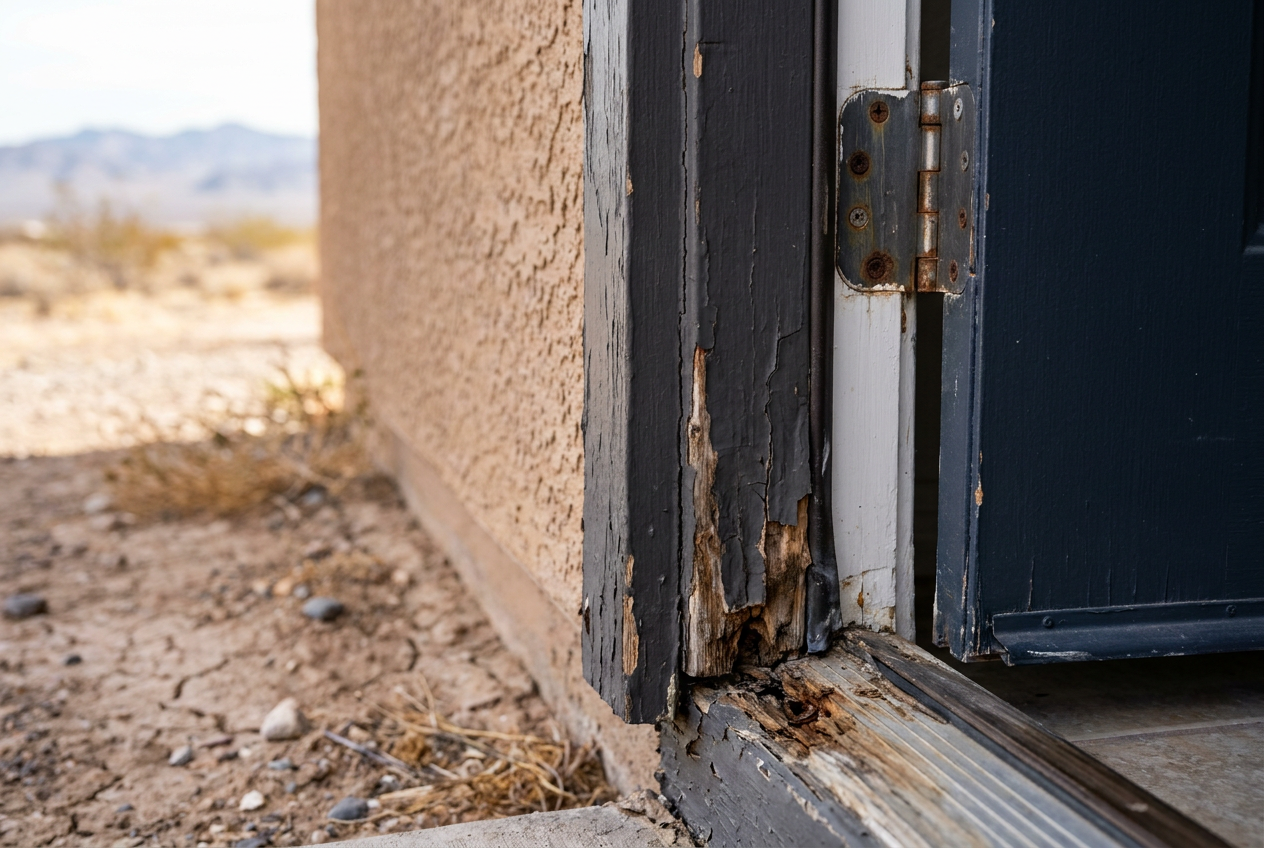
6. The Door Has Warped After Years of Heat and Sun
In Las Vegas, a door can warp without ever looking warped. Prolonged sun exposure and extreme heat can gradually distort a door slab enough to change how it sits in the frame. The tricky part is that door warping from heat and sun exposure rarely announces itself all at once. It usually shows up indirectly: the top of the door seals tightly while the bottom leaks air, or one side latches cleanly while the other side stays slightly loose. Southern Nevada’s climate puts real stress on doors that weren’t built to handle it.
Once warping affects how the door fits and seals, the problem tends to stay. Adjusting hardware or adding weatherstripping can mask the symptom, but it doesn’t correct the shape of the slab or how it meets the frame. At that point, replacement is usually the more practical path. Living with uneven performance means living with uneven sealing, and in a Southern Nevada summer, that gap matters more than most homeowners realize.
7. The Lockset or Hardware Feels Loose
A loose deadbolt or handle set is easy to dismiss as a minor annoyance, but it usually points to something worth paying attention to. When hardware starts to wobble, the most common cause is not just a few loose screws. It often means the door and frame have shifted enough that they are no longer holding the hardware with the same grip they had when the door was first installed. Security concerns with loose locks and hardware tend to compound: the more the slab shifts or rattles in the frame, the less solid backing the lockset has to do its job.
A few signs that the hardware is telling you more than it seems:
- A deadbolt that no longer throws smoothly often means the slab has moved out of alignment with the strike plate, not just that the lock is worn out.
- A handle set that wobbles or has visible play suggests the door material around the hardware may have degraded enough to lose its holding strength.
- A door that rattles noticeably in the frame when the wind picks up means the slab is not sitting tightly enough for the lockset to engage with real resistance behind it.
- If forcing the door shut is the only way to get the latch to catch, the alignment issue is already affecting both security and daily operation at the same time.
When locking up at night no longer feels solid and certain, that is a performance warning. A well-fitted, properly sealed door should feel secure when it closes. If it doesn’t, the problem is usually the full door system, not just the hardware sitting in it.
8. You See Moisture at the Threshold or Lower Frame
Moisture staining, soft trim, or repeated dampness near the threshold is a sign that the lower part of the opening has stopped managing water correctly. Las Vegas is dry most of the year, but wind-driven rain and irrigation splash still find their way into weak seals around an aging door. When water intrusion at the threshold keeps showing up, the seal between the door system and the opening has broken down in a way that caulking or a towel at the base cannot fix.
The concern shifts quickly once moisture gets past the surface. The surrounding framing, trim, and subfloor materials can start to soften and break down from repeated exposure. What starts as a damp spot becomes a structural problem in the materials you cannot see. A door that can no longer keep that lower edge dry is telling you the whole system, frame, threshold, and seal, needs to be replaced, not patched.
9. The Surface Is Breaking Down, and Energy Use Is Creeping Up
Faded finish, peeling paint, or cracked door material means the door has spent years absorbing sun, heat, and temperature swings without adequate protection left to push back. In Las Vegas, that kind of surface wear rarely stays cosmetic for long. Once the outer layer breaks down, the seals and insulation underneath follow. A door that looks rough on the outside is often leaking air around the frame, too, which is where poor insulation starts showing up on your energy bills.
A slow rise in cooling costs does not point to the door alone, but if that trend lines up with visible surface wear and air leaks around the frame, the opening is likely underperforming across the board. The insulation inside an aging door slab loses effectiveness over time, and worn seals fail to seal the gap between the slab and the frame. When both happen together, the full door system needs attention, not just a coat of paint. An in-home consultation and energy inspection is the clearest way to know whether what you are seeing on the surface is connected to what your home is losing in comfort and efficiency.
FAQ: Replacing an Exterior Door
Here are the questions Las Vegas homeowners most often ask before deciding whether the signs that it’s time to replace your front door add up to something worth acting on.
Can an exterior door look fine and still need replacement?
Yes, and this is one of the most common situations. A door can hold its paint and hardware while still failing at the seal, letting heat in around the frame or allowing air to move through gaps you cannot always see. Appearance and performance are two separate things.
Is a hard-to-close front door usually a sign of misalignment, warping, or both?
Often both. In Las Vegas, prolonged heat and sun can warp a slab enough to throw off its fit in the frame, which also puts stress on the hinges. When that happens, the door stops sealing evenly and starts taking more effort to close and latch every day.
Do worn seals and visible gaps around an entry door affect home comfort?
Directly. When the seal breaks down, outdoor air moves through the perimeter of the opening, and in Southern Nevada summers, that means heat near the entry that your cooling system has to work against. A well-sealed door keeps the entryway noticeably more comfortable. Our entry door guide covers what to look for in replacement materials for this climate.
How do homeowners know if security concerns are from the lock or the full door system?
A loose deadbolt alone is a hardware problem. But if the door also rattles, shifts, or doesn’t sit tightly against the frame when closed, the lock has less solid backing to work against. Security depends on the whole door fitting and seating correctly, not just the lockset.
What should a homeowner expect from a complimentary in-home consultation?
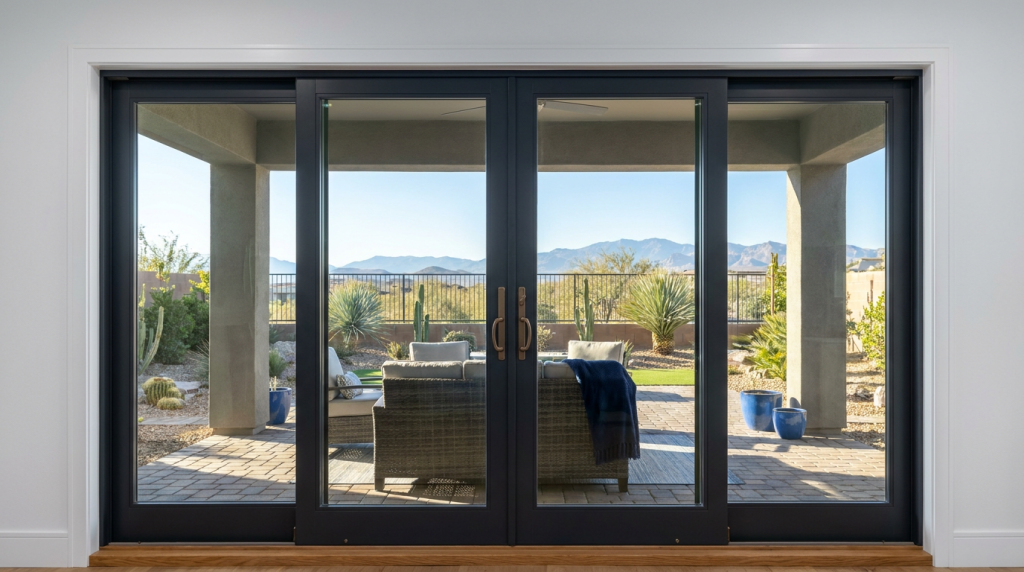
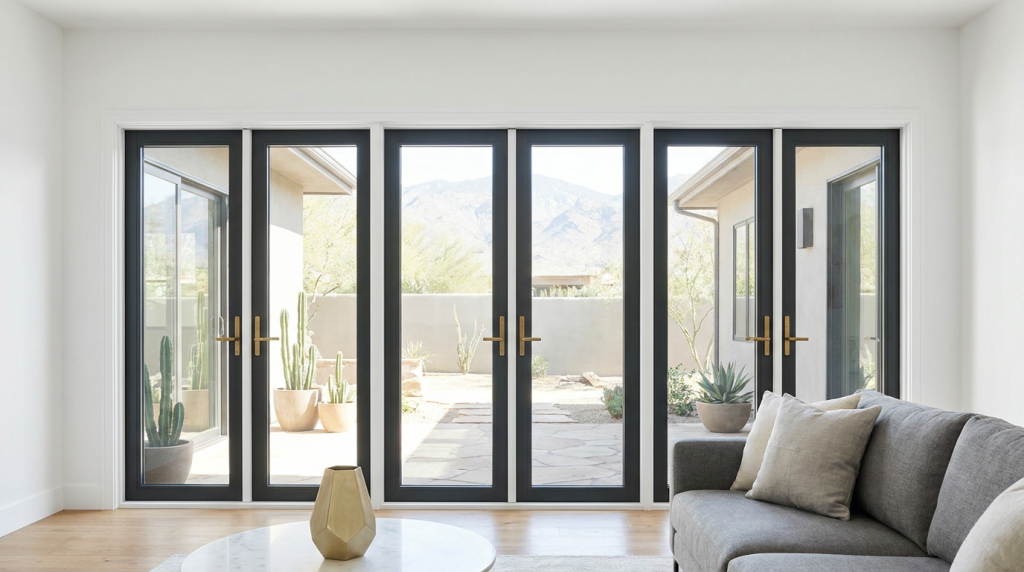
Our team looks at the existing door, the frame, and how the opening is performing before recommending anything. You get a clear explanation of what’s causing the problem, a real price, and a plain-language breakdown of what the installation and warranty cover, with no obligation to move forward. Our indoor-outdoor door guide covers patio door options worth knowing before your consultation.
A Better-Sealing Door Should Feel Safer, Cooler, and Easier to Use
If several of these signs sound familiar, you are not dealing with isolated quirks. Air leaks, sticking operation, heat near the entry, and loose hardware are connected symptoms of a door system that has drifted past the point where adjustments hold. That is how doors fail in Southern Nevada: gradually, across multiple signs at once, and usually before the surface shows anything obviously wrong.
The Window & Door Store measures the opening, identifies the cause of the performance problems, and walks you through your Entry & Patio Door options with a clear price, warranty explanation, and installation plan. Schedule your complimentary in-home consultation and see what a better-fitting door actually feels like.