In Las Vegas, window replacement cost is shaped less by square footage than by the actual openings, sun exposure, and installation conditions in your home.
A lower quote is not automatically a better value if it skimps on the glass package or leaves out labor, stucco, trim, or other full-scope installation work.
The right way to price replacement windows is to match frame and glass performance to the rooms that run hottest, then spell out the entire job before installation begins.
Two Las Vegas homeowners on the same street, same square footage, same number of windows, can get quotes that differ by thousands of dollars. Both quotes can be accurate. That is the part no national pricing guide mentions: what affects window replacement cost in Las Vegas is not primarily window count. It is how the existing home was built, how much real heat control the worst rooms actually need, and whether the company pricing the job is being honest about the full scope of work from the start.
The sections below walk through each of those variables in plain terms, so when a quote lands in front of you, you can evaluate what you are actually looking at. The Window & Door Store offers a complimentary, no-obligation in-home consultation that does exactly that for Las Vegas homeowners before any commitment is made.
Why Las Vegas Window Quotes Vary More Than Homeowners Expect
Window replacement cost in Las Vegas spreads wider than national averages suggest, because the openings, the glass performance needed, and the actual installation conditions vary from house to house, even in the same neighborhood. National cost guides show per-window averages that can look reassuring, but those figures do not account for how a west-facing bedroom bakes differently than a shaded north wall, or how fast-built production housing across Henderson and Summerlin tends to hide worn frames and out-of-square openings behind a fresh coat of paint.
A quote that is genuinely useful does more than name a price. It tells you what product is going into each opening, what glass performance level is included, and what site work the installer expects to handle before the first window comes out. This Old House recommends always requesting a written estimate that specifies included work and anticipated repairs. In Las Vegas, that is not optional advice. The desert heat, the dust, and the construction shortcuts common in volume-built homes across Henderson and Summerlin mean the gap between a complete estimate and a vague one runs wider here than in most markets.
1. Window Style and Size Change the Base Price First
Window style and size are the first two things that move a base quote, before glass upgrades or installation conditions enter the picture. A picture window is a fixed piece of glass with no moving parts, which keeps it simpler to manufacture and install. A casement opens on a hinge and uses an operator mechanism, weatherstripping, and locking hardware. A slider runs on a track system with its own components. Each of those differences shows up in the price, which is why comparing window styles side by side before committing to a quote helps homeowners understand what they are actually being priced on.
Size compounds the cost in a straightforward way: a larger opening needs more frame material, heavier glass, and stronger hardware to support it. Some frame materials, like the fiberglass used in Infinity by Marvin replacement windows, can span larger glass areas without adding bulk, which affects both how the window performs and what it costs. The honest comparison across a whole-home project is never just window count. It is style-for-style and size-for-size, because two quotes with the same number of windows can reflect entirely different scopes.
2. Frame Material Choice Affects Price and Heat Performance
The frame is not just the border around the glass. It is a structural component that transfers heat, holds its shape through temperature swings, and affects how the whole window performs year after year. According to the Efficient Windows Collaborative, frame material influences the energy performance of the entire window unit, which is why it belongs in any honest cost conversation. In Las Vegas, that influence is amplified because the climate pushes every material harder than it would be in almost any other place.
Fiberglass frames expand and contract at nearly the same rate as glass, which means the seal between frame and pane stays tight through years of desert temperature swings. That dimensional stability is one reason fiberglass costs more upfront and holds up better over time.
Aluminum conducts heat directly into the home, which makes it a poor fit for west- and south-facing rooms that already take the hardest sun. Using a metal frame when it is 110 degrees outside works against the comfort the homeowner is trying to gain.
Vinyl is a reasonable mid-range option for budget-conscious projects, but it can warp or fade under sustained desert heat, especially on exposures with no shade.
A lower frame price does not automatically mean better value. ENERGY STAR’s independently tested ratings measure whole-unit performance, and a cheaper frame that raises heat gain in the worst rooms can cost more in comfort and energy over time than the upfront savings suggest.
The Infinity by Marvin line uses Ultrex fiberglass specifically because of how it performs under sustained heat load, and that material decision shows up in the quote. It is the kind of difference worth understanding before accepting the lower number.
Frame material and long-term comfort are not two separate decisions. The price difference between a vinyl frame and a fiberglass one is real; so is the performance gap, and in a Las Vegas home that routinely hits 110 degrees from June through September, that gap shows up in every room facing west or south. Our guide to window materials for Las Vegas heat walks through the specifics.
3. Energy-Efficient Glass Packages Often Decide the Real Value
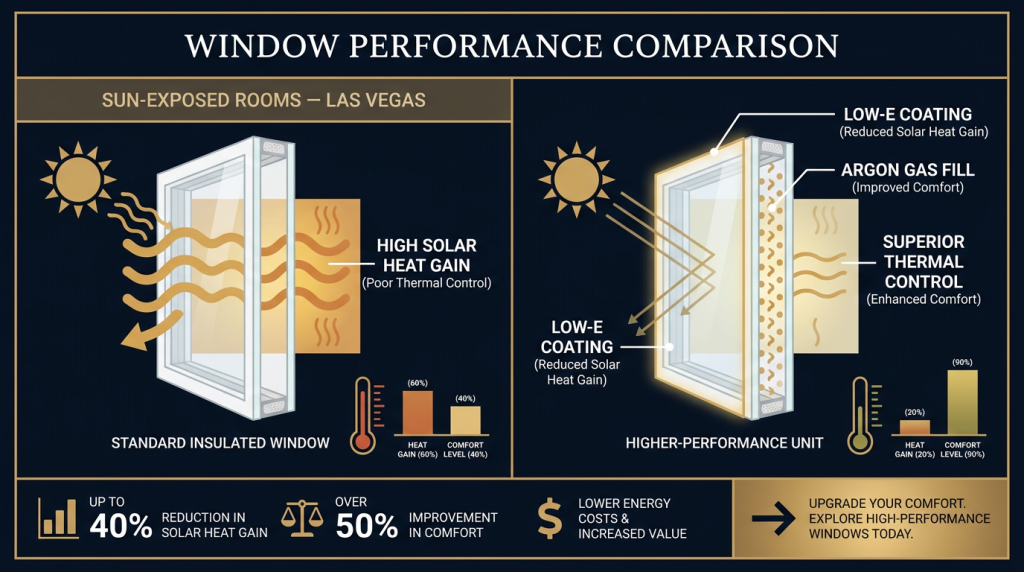
Glass package upgrades add cost, but in Las Vegas, they are often where the project earns its keep. A basic glass package does very little to cut solar heat gain in a west-facing bedroom or a living room that bakes from noon onward. The right glass package filters out the heat before it enters the room, which is what homeowners actually feel on a 110-degree afternoon in July.
When a quote uses a minimal glass spec, it can look competitive on paper while leaving the hottest rooms just as uncomfortable as before. What homeowners are really paying for with energy-efficient glass packages is better solar control and year-round comfort, not a fancier number on a spec sheet. A lower quote that skips meaningful glass performance is not a bargain; it is a gap that shows up every summer.
4. Low-E Coatings and Argon Gas Fill Are Not Throwaway Upgrades
Most homeowners hear “Low-E glass” or “argon fill” and assume they are optional extras added to bump up a quote. In Las Vegas, they are closer to the minimum that makes a window worth buying. Understanding what these features actually do makes it easier to evaluate whether a quote is giving you real heat control or just a lower number.
Low-E stands for low-emissivity. It is a thin metallic coating applied to the glass that reflects solar heat before it passes into the room, which is exactly what drives high energy bills and overheated rooms in west- and south-facing Las Vegas homes.
Argon gas fill sits between the panes of an insulated glass unit. Argon transfers heat more slowly than air does, so it acts as a thermal buffer that helps maintain the temperature separation between outside and inside.
Together, these two features address what Southern Nevada homeowners notice most: how aggressively the sun pushes heat through the glass. A window without them is working against you from June through September.
The Infinity by Marvin line sources its glass packages through Cardinal Glass, which fills the spaces and includes glazing options with Low-E coatings specified to Southern Nevada conditions, not generic national defaults.
When a quote does not spell out the glass package, you cannot tell whether the price reflects a window that will actually perform or one that simply fills the opening.
The glass package is one of the clearest places where two quotes that look similar on paper are actually pricing two different results. Asking a company to name the coating and the gas fill before you compare numbers is a reasonable, practical step.
5. Custom Window Shapes and Nonstandard Openings Cost More Because They Take More Precision
Arched windows, angled transoms, and other specialty shapes cost more than standard openings because the product itself is less standardized. There is less margin for error in the measurements, and the manufacturing process is more involved. A round-top arch, for example, cannot be swapped in from a stock order the way a rectangular slider can. That added precision at the product level shows up in the price before installation even begins.
Older homes and heavily modified production houses across the valley add another layer of complexity. An opening can look like a standard size from across the room, but measure differently once a crew is on-site with a tape measure. That gap between appearance and reality is exactly why careful field measurement matters. A quote built on actual dimensions, including any surprises in the rough opening, is far more reliable than one written from a quick visual scan and a standard assumption.
6. Full-Frame Replacement vs Insert Replacement Changes Both Scope and Cost
Insert replacement fits a new window into the existing frame, leaving the surrounding structure in place. Full-frame replacement removes the entire old unit, frame and all, so the installer can see and address what is behind it. The full-frame approach costs more because it takes more time and can uncover additional work, but it is often the right call when the existing frame is warped, poorly sealed, or contributing to the comfort problem in the first place.
Choosing between these two methods should come from an honest look at the home, not a default preference. If the frame is sound and the opening is square, an insert can be the right fit. If the frame is part of the problem, inserting means the new window is sitting inside a compromised shell. A company worth hiring will inspect the existing conditions and explain the recommendation plainly before any work begins.
7. Installation Labor, Project Complexity, and Exterior Finish Work Can Move the Quote Fast
Of all the line items in a window replacement estimate, labor is the one homeowners are least equipped to evaluate. The window product has a name, a spec sheet, and a price you can look up. The work required to install it correctly has none of those things, and it varies more than the product does, depending on the home, the openings, and what the installer finds once the old unit comes out.
Access and opening variations add time. A two-story home with windows that are harder to reach, or a floor plan where no two openings are exactly alike, takes longer to work through. That added time shows up in the labor cost.
Worn openings often need more than a simple swap. When frames have shifted, seals have failed, or moisture has worked into the surrounding material over years of desert heat and sun, the installer has to address that before the new window goes in. Skipping that step produces a new window in a compromised opening.
Interior trim work affects the final look. If the existing casing is damaged or the new window sits differently than the old one, getting the interior finish right takes additional care and sometimes additional material.
Exterior stucco patching is common in Las Vegas production homes. Many homes in Henderson, Summerlin, and surrounding communities were built with stucco exteriors. When the rough opening needs any adjustment, or the old window left a visible gap in the stucco, that finish work is part of the job and should be in the estimate from the start.
Incomplete labor scopes are one of the most common sources of surprise charges. A quote that prices the product accurately but leaves out stucco repair, trim replacement, or added site work will look lower on paper until the project is underway.
The clearest sign of an honest estimate is that it accounts for installation labor and project complexity before any work begins, not after the first window is out.
8. Permit Requirements and Structural Changes Add Cost for Good Reason
Most standard window replacements in Las Vegas do not require a permit. But when a project changes the size of an opening, adds a new opening, or involves structural work around the frame, the scope changes. That means framing, drywall, stucco, inspections, and coordination with the city. Those steps take more time and carry a real cost. That cost is justified. It is the difference between a job done correctly and one that skips steps.
A homeowner should know early in the process whether a quote covers a direct replacement or a larger remodel-style scope. Those are two different projects with two different price ranges. A quote that does not draw that line clearly is a quote worth asking about before signing anything.
FAQ About Window Replacement Cost in Las Vegas
Pricing questions rarely come with simple answers, and that is especially true for window replacement in Las Vegas, where the home’s construction, sun exposure, and installation scope all play a role. The answers below address the window replacement cost questions Las Vegas homeowners ask most often before committing to a project.
How can I tell if a quote is missing part of the installation scope?
Look for line items that cover labor, exterior finish work, and trim. If a quote lists only the window product with a flat installation fee, ask directly whether stucco patching, interior casing, and worn-opening repairs are included. A complete quote answers those questions before you sign, not after the first window comes out.
Is full-home replacement always cheaper per window than replacing a few at a time?
Not automatically, but whole-home projects often reduce the per-unit labor cost because the crew is already on-site and working through the home in one run. The savings depend on the number of windows, the complexity of the openings, and the product selected. It is worth asking for both scenarios when you get your estimate.
Which upgrade matters more for hot rooms in Las Vegas: frame material or glass package?
Glass package makes the biggest difference for heat gain, because solar control happens at the glass level. The Efficient Windows Collaborative confirms that glazing performance drives comfort outcomes in hot climates more than frame material alone. That said, fiberglass frames hold up better than aluminum when temperatures hit 110 degrees, so both choices matter.
Do homeowners need permits for standard window replacements in Las Vegas?
Most like-for-like window replacements do not require a permit, but the rules vary by jurisdiction. Clark County’s building department outlines what triggers a permit requirement, and city limits in Henderson or Las Vegas proper may follow different rules. If the project changes an opening’s size or involves structural work, permits are part of the job.
How disruptive is the installation process for a typical home?
For most residential projects, not very. The majority of installations are completed in a single day, and a good crew works room by room, so the rest of the home stays usable. Cleanup is part of the job. The biggest disruption is usually the day of installation itself, not the days of ongoing construction.
Get a Quote That Matches the Home, Not a Generic Average
Every cost driver in this article points back to the same conclusion: a window replacement quote is only useful when it accounts for the specific home, not a hypothetical average one. The west-facing bedroom baking through July, the frame condition hidden behind stucco, the glass package that actually cuts heat rather than just fills the opening. A quote that ignores those variables is not a competitive price. It is an incomplete one.
The most practical next step is a complimentary, no-obligation in-home consultation and energy inspection. The Window & Door Store looks at the actual windows, identifies which rooms and exposures are driving the comfort problems, and gives you one estimate that covers everything from measurement to cleanup. No vague ranges, no line items that appear later.
The best patio door for a Las Vegas home is the one that fits the opening, the backyard layout, and the heat, not the one that looks most dramatic in a photo.
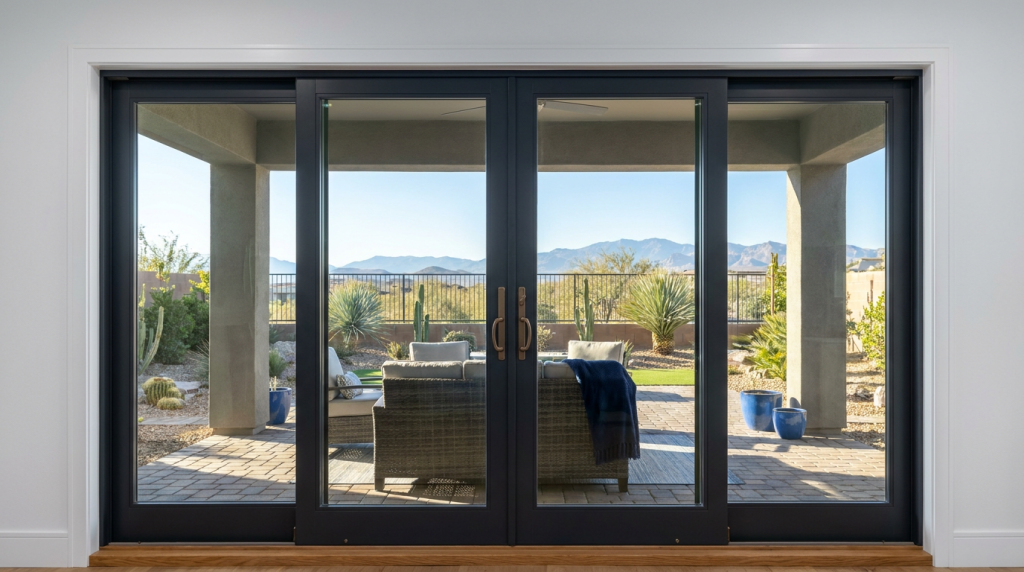
Sliding doors are usually the cleanest upgrade within an existing opening, while multi-slide doors are the stronger choice when the goal is to open a wide back wall to a pool, patio, or view.
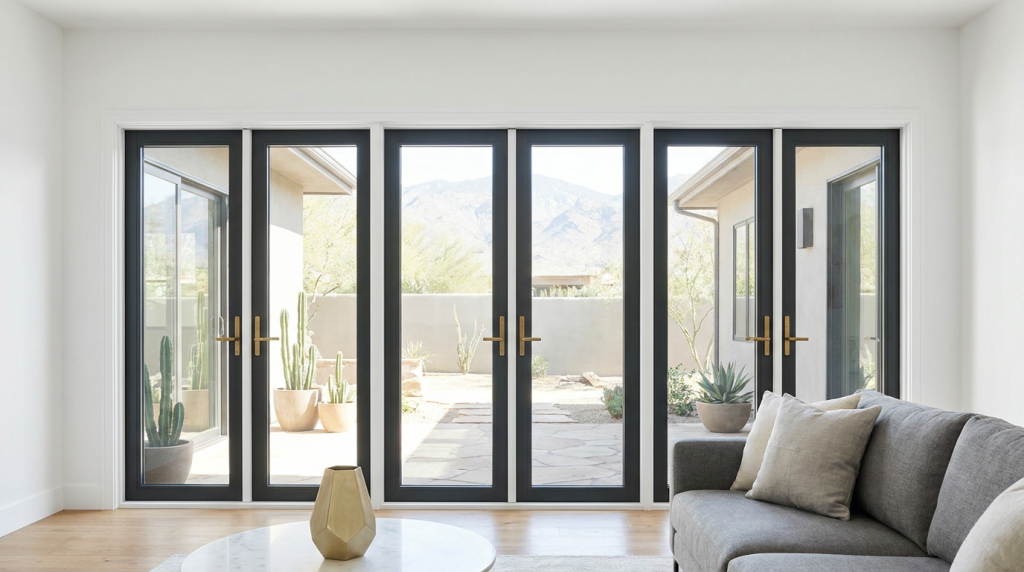
In Southern Nevada, door style and construction scope go together: larger multi-panel systems often require wall modification, and frame material and glass package play a major role in how the system performs in the desert sun.
A well-run window replacement project follows a clear sequence from in-home inspection to final walkthrough, with one quote and one team handling the job from start to finish.
In Las Vegas homes, the right recommendation is room-specific: glass should match sun exposure, fiberglass frames outperform aluminum in extreme heat, and precise installation is what turns new windows into cooler, quieter rooms.
Most replacement window installations are more contained than homeowners expect, with accurate prep allowing most projects to finish in one day, room-by-room work that keeps the house livable, and cleanup and disposal included before the crew leaves.
A better indoor-outdoor connection starts with the door that fits your room’s traffic, layout, and opening, not simply the one with the most glass.
In Las Vegas, frame material and a tight installation seal matter as much as door style because heat, dust, and direct sun can shorten the life of hardware and weaken performance.
The doors that glide smoothly and hold up are the ones measured and installed by the same experienced team, with one clear scope and one point of contact from start to finish.
What type of residential replacement project are you considering?
Number of Windows
Door TypeWhat type of doors are you looking to replace?
Your Address
Contact Details
Additional details
Add pictures to make your description more detailed.
I want to learn more about the Window and Door Store and schedule an in-home price quote. By submitting this form, which I agree is my signature, I consent to receive recurring informational and advertising calls, and emails from the Window and Door Store, including by automated technology or prerecorded voice. I understand consent is not required for purchase and that I can opt out at any time, I understand any Window and Door Store calls may be recorded. The Window and Door Store collects certain categories of personal information and uses this information in various ways, including order fulfillment and providing product information and services, as further described in our Privacy Policy. I have been provided The Window and Door Store’s Privacy Policy and agree to its Terms and Conditions. Message and data rates apply.