Key Takeaways:
- In Las Vegas, the clearest replacement signs are usually recurring comfort problems like hot bedrooms, drafts from closed windows, and rising noise levels, not a dramatic crack or a window hitting a certain age.
- Foggy glass, windows that stick or will not lock, and warped or sun-damaged frames are performance failures, not minor cosmetic issues, because the seal, fit, or frame has broken down.
- The smartest way to decide is to evaluate how each window is performing in your home and prioritize the worst offenders first, rather than replacing everything at once based on a calendar.
Most windows don’t fail all at once. They wear out slowly, one uncomfortable summer at a time, until a bedroom becomes unusable by June or the AC runs nonstop and the bill climbs anyway. By the time a homeowner starts searching for answers, the windows have usually been underperforming for years.
The signs worth paying attention to are practical ones: rooms that won’t cool down, drafts you can feel with the windows shut, noise that keeps getting louder, seals that have given out, and frames that look as tired as they perform. None of those requires a dramatic crack or a broken pane. They just require honest attention to how the windows are doing their job in your home, right now. The Window & Door Store helps Las Vegas homeowners work through exactly that evaluation, without a generic age chart or a high-pressure pitch.
What Counts as a Real Replacement Sign
A single uncomfortable afternoon is not a replacement sign. A pattern is. The windows worth evaluating are the ones causing consistent, noticeable problems across multiple days and seasons: a bedroom that never cools down, a draft you notice every time the wind picks up, a seal that has given out and left the glass foggy. One-time annoyances are noise; recurring ones are data.
In Southern Nevada, those patterns tend to surface faster than in other climates. Heat, UV exposure, and dust push weak glass, worn seals, and lower-grade frames harder than most materials were built to handle. The comfort gap between a problem room and the rest of the house is often where the real story starts. Knowing which windows are causing the trouble, and how, gives you something to act on instead of a guess.
1. Certain Rooms Stay Hot Even With the AC Running
When the rest of the house feels fine, but one bedroom or west-facing space becomes genuinely hard to be in by May, that’s a window problem worth taking seriously. The AC isn’t failing those rooms; the windows are letting heat through faster than the system can remove it. In Las Vegas, where solar heat gain through glass is one of the biggest comfort drains in a home, thin glass and worn seals in a single room can make that space feel like a different house entirely.
This sign is more useful than a window age estimate because it tells you exactly where the problem is. Instead of replacing everything at once based on a calendar, you can start with the rooms that stay hot even with the AC running and see the difference where it matters most. Our Las Vegas window energy guide walks through how to evaluate each room before committing to a replacement.
2. You Feel Drafts Around Closed Windows
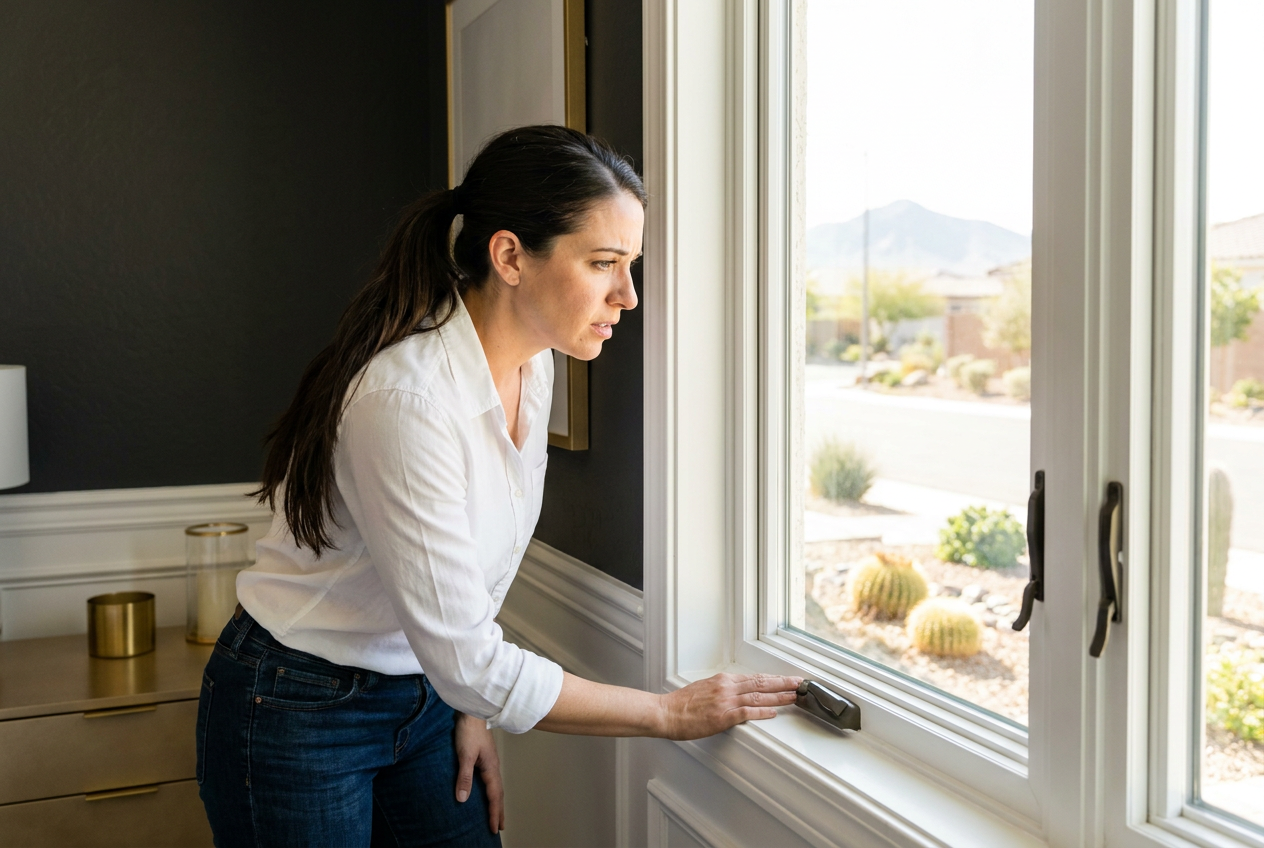
A closed window should hold. If you feel moving air near the frame when the wind picks up outside, or notice the curtains shifting on a still day, that window is not doing its job. Drafts and air leaks around closed windows are one of the more reliable performance signals a home can give you, and they tend to show up in the same spots every time.
When a draft keeps showing up in the same spot, it usually means:
- A repeating draft points to a seal failure, not a fluke. When the same window feels breezy month after month, the weatherstripping, the frame, or the glazing seal has broken down and is letting outside air in. Building Science Corporation notes that uncontrolled air leakage can account for up to a third of a home’s energy loss, which helps explain why a few drafty windows can make the whole house harder to keep comfortable.
- You do not need to see a gap to feel one. Air finds the smallest path in, often behind the frame or along aged seals that look intact from the inside. A simple candle or incense stick held near the frame edge on a windy day will show movement where there should be none; Natural Resources Canada recommends this as a practical first diagnostic before bringing in a professional.
- Uneven room temperatures usually follow. The room with the leaky window often reads several degrees warmer or cooler than the rest of the house. That gap is the draft doing its work over time, not just a momentary breeze.
- When caulk and weatherstripping have already been tried, replacement is the honest next step. Surface fixes can help a window that is slightly loose. They rarely solve the problem when the frame itself has shifted, warped, or worn past the point where a new seal can hold under Las Vegas wind and temperature swings.
A draft is not a cosmetic problem. It is a performance problem that shows up every day, and when it keeps coming back in the same opening, the window can no longer do its job.
3. Energy Bills Keep Climbing Without a Clear Reason
A window does not need to be cracked or broken to waste energy. Thin glass, worn seals, and a poor fit between the frame and the opening can all make your AC work harder than it should, especially in a Las Vegas summer. If your cooling costs have been rising and the house still feels uncomfortable, your windows are worth a closer look before you blame the equipment.
That said, a high utility bill on its own does not point the finger squarely at your windows. The sign gets more convincing when it shows up alongside hot rooms or drafts you can already feel. That combination suggests the windows are letting heat in and conditioned air out at the same time, which is exactly the kind of problem a complimentary in-home consultation can identify room by room, without guesswork.
4. Outside Noise Comes Through More Than It Used To
The neighborhood didn’t get louder. The windows got worse. When traffic, landscaping crews, or school pickup sounds feel closer than they used to, that shift is almost always happening at the glass and frame, not out on the street. Thin glass and aging frames stop buffering outside noise coming through thin windows well before they look like they need replacing from inside the room. Infinity by Marvin replacement windows, for example, use glazing construction specifically chosen to reduce how much exterior noise reaches the interior.
Sound is usually the last performance signal to surface, not the first. If the windows are already failing on heat and air, noise follows. Most homeowners notice it right around the time they are dealing with hot rooms and drafts, and that overlap matters: when multiple comfort complaints point to the same windows, noise stops being a background irritation and becomes another data point in the same pattern. Frame material affects sound insulation too: thicker, denser frames absorb more exterior noise than thin profiles with worn-out seals.
5. The Glass Looks Foggy, or the Seal Has Failed
This one is easy to spot. If you see a haze or cloudiness between the panes that does not go away when you wipe the glass, that is not a cleaning problem. That is a failed seal.
Most residential windows use an insulated glass unit, which is two panes of glass with a sealed air or gas layer in between. That gap is what does the insulating work. When the seal breaks down, outside air and moisture get in, and that is what creates the foggy look. Once the seal goes, the window cannot perform the way it was designed to.
What that means for your home:
- Foggy glass that stays between the panes is a reliable sign the seal has failed, not something that clears up on its own.
- A failed seal means the insulating layer between the panes is gone, so heat moves through the glass more easily, which puts more load on your AC.
- In Las Vegas, west- and south-facing windows tend to fail first because the daily heat cycling puts the most stress on seals over time.
- This sign is one of the easiest to verify for yourself because you can see it clearly before you know anything about how the window was built.
- Once the frame and seal are both compromised, no cleaning or adjustment restores the window’s thermal performance.
If you are walking room to room and notice fogged glass in two or three windows, those openings have already stopped doing their job. That is worth paying attention to.
6. The Windows Are Hard to Open, Close, or Lock
A window that sticks, binds, or refuses to latch is not just a small inconvenience. It usually means the sash, frame, or hardware has shifted enough that the window no longer operates the way it was designed to. In Las Vegas, years of heat cycling cause frames to expand, contract, and eventually lose their original shape. When that happens, the fit goes with it.
The practical consequence is that windows that are hard to open or lock tend to get left alone. Homeowners stop opening them for ventilation, and a latch that will not seat fully means the window is not secured properly either. Smooth, reliable operation is part of what a window is supposed to do. If yours no longer does it, that is a performance problem worth evaluating, even when the glass itself still looks fine. A complimentary in-home consultation can help identify whether the issue is isolated or part of a broader pattern across the home.
7. The Frames Look Warped, Cracked, or Sun-Beaten
The frame is easy to overlook when you are focused on glass and seals, but it is doing real structural work. Warped, cracked, or sun-damaged window frames are what you get after years of Las Vegas heat cycling, UV exposure, and dust working away at the material. Once the frame loses its shape, the whole window loses its fit. Air gets in where it should not, the sash stops seating cleanly, and no amount of adjustment brings it back. At that point, you are not dealing with an old window. You are dealing with a worn-out one.
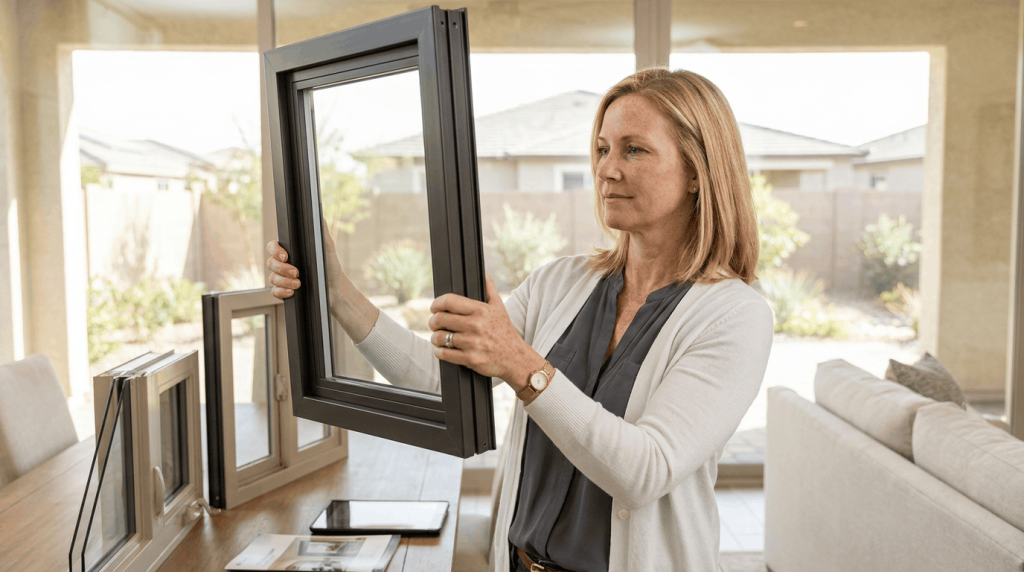
The material matters here. Vinyl frames are common in Las Vegas production homes, and they can become brittle and discolored after years of desert sun. Fiberglass frames handle the heat significantly better because the material expands and contracts far less across temperature swings. If your current frames are showing visible deterioration, that is worth bringing up during a consultation. Our replacement windows page walks through material options and what full-frame replacement looks like when the opening itself needs attention.
Signs It May Be Time to Replace Your Windows FAQs
How do you know when to replace windows? In most Las Vegas homes, performance is the guide: recurring hot rooms, persistent drafts, foggy glass, or frames that have visibly broken down are more reliable signals than any age rule. Below are the questions homeowners most often bring to a consultation, ranging from energy bills and noise to what the installation actually looks like in a busy household.
Do hot rooms always mean the windows are the problem?
Not always. Insulation, duct leaks, and attic ventilation can all contribute to an uncomfortable room. That said, windows are often the fastest path for heat to enter. If the same room runs hot year after year and the rest of the house stays manageable, the windows in that space deserve a closer look.
Should windows be replaced based on age alone?
Age is a reference point, not a verdict. A 15-year-old window that seals well and keeps a room comfortable is doing its job. A window that causes drafts, noise, or heat gain regardless of age is not. Performance in your home is a more honest guide than any number on a calendar.
If only a few windows are causing problems, does the whole home need to be replaced at once?
No. Replacing the windows causing the most trouble first is a reasonable approach. During a complimentary in-home consultation, the team evaluates each opening and can help you prioritize based on comfort impact, not pressure to do everything at once.
How disruptive is installing replacement windows for a busy household?
Less than most homeowners expect. Most installations are completed in one day, and the crew handles measuring, installation, and cleanup as one job. There are no contractor handoffs or open-ended timelines. For a full picture of what the process looks like, the company’s homeowner guide walks through it clearly.
What happens during a complimentary in-home consultation and energy inspection?
The team walks through your home, looks at each window’s condition and performance, and explains what they find in plain language. You get specific product recommendations, a clear sense of installation scope, and answers to cost and financing questions, with no obligation to move forward on the spot.
Get a Clear Read on What Your Windows Are Doing
Most Las Vegas homeowners wait for something to break before they look at the windows. In the meantime, the bedroom runs hot every summer, the AC bill climbs, and the house stays harder to live in than it needs to be. The signs covered here do not require a dramatic failure. They just require noticing what is already happening.
A complimentary, no-obligation in-home consultation from The Window & Door Store gives you a room-by-room read on which replacement windows are doing their job and which ones are costing you comfort. We walk through what we find in plain language, including material options, energy performance, installation scope, and financing, with no pressure to move forward until it makes sense for your home.